
Vision Therapy for Children in Alma, MI
Is your child struggling with reading, focusing, or keeping up in school? Even when eyesight seems clear, issues with how the eyes work together can make learning more difficult. Pediatric vision therapy can help children build the visual skills they need for school and everyday life.

Building Stronger Visual Skills
Pediatric vision therapy focuses on improving how your child’s eyes work together and how they process what they see. Through guided activities, we help strengthen skills like tracking, focusing, and coordination, making it easier for your child to read, learn, and stay comfortable during schoolwork. Each program is tailored to your child’s needs. Over time, many children experience improved comfort, better focus, and a more positive approach to learning.
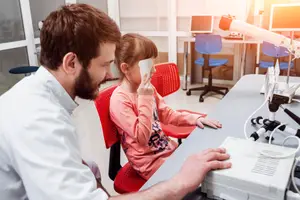
From medical treatments to your annual eye exam, we provide a wide range of services at Alma Optics.
Located in Alma, our office provides community-focused eye care for patients throughout the area.
Meet the eye doctors at Alma Optics. Here, you get care backed by a network of clinical expertise.
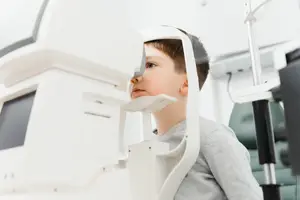
Signs Vision May Be Affecting Your Child's Learning
Some children work harder than others to keep up with classroom tasks, even when they’re trying their best. In many cases, the issue isn’t effort—it’s how their visual system is functioning. Vision-related challenges can sometimes show up as:
- Losing their place while reading
- Skipping lines or rereading the same line
- Avoiding reading or homework
- Complaining of headaches or tired eyes
- Difficulty focusing or staying on task
- Trouble with hand-eye coordination
These signs are often mistaken for attention or learning issues, but they can be related to how the eyes track, focus, and work together.
Our Step-by-step approach
Pediatric vision therapy is a process that builds gradually, with each step designed to support your child’s progress in a comfortable and encouraging way. We take the time to understand your child’s needs and create a plan that fits their pace.
Your child’s care typically includes:
A sensorimotor exam
We start with an evaluation to understand how your child’s eyes work and identify any areas that may be affecting their learning or visual comfort.
A personalized plan
Based on the results, Drs. Kyle and Megan Lark, along with our vision therapist, Shelly Young, create a program tailored to your child’s needs and goals.
one-on-one sessions
Each visit focuses on building visual skills like tracking, focusing, and coordination through structured, engaging activities.
Ongoing progress
As your child improves, we monitor their progress and adjust the program to keep them moving forward with confidence.
An eye evaluation can help determine whether vision therapy is the right next step and give you a clearer understanding of what your child needs. Our goal is to make the process supportive and encouraging, so your child can build stronger visual skills over time.

Let's Help Your Child Thrive
If you’re concerned about how your child’s vision may be affecting their learning, we’re here to help you find answers. The first step is a sensorimotor exam, where we take a closer look at how their visual system is functioning. Please call our eye clinic to schedule your child’s evaluation so we can guide you toward the right type of care.